White Paper
08/18/2026
Campus Consortium Foundation
Agentic Voice AI: From Call Deflection to Student Retention
Why Read This Research
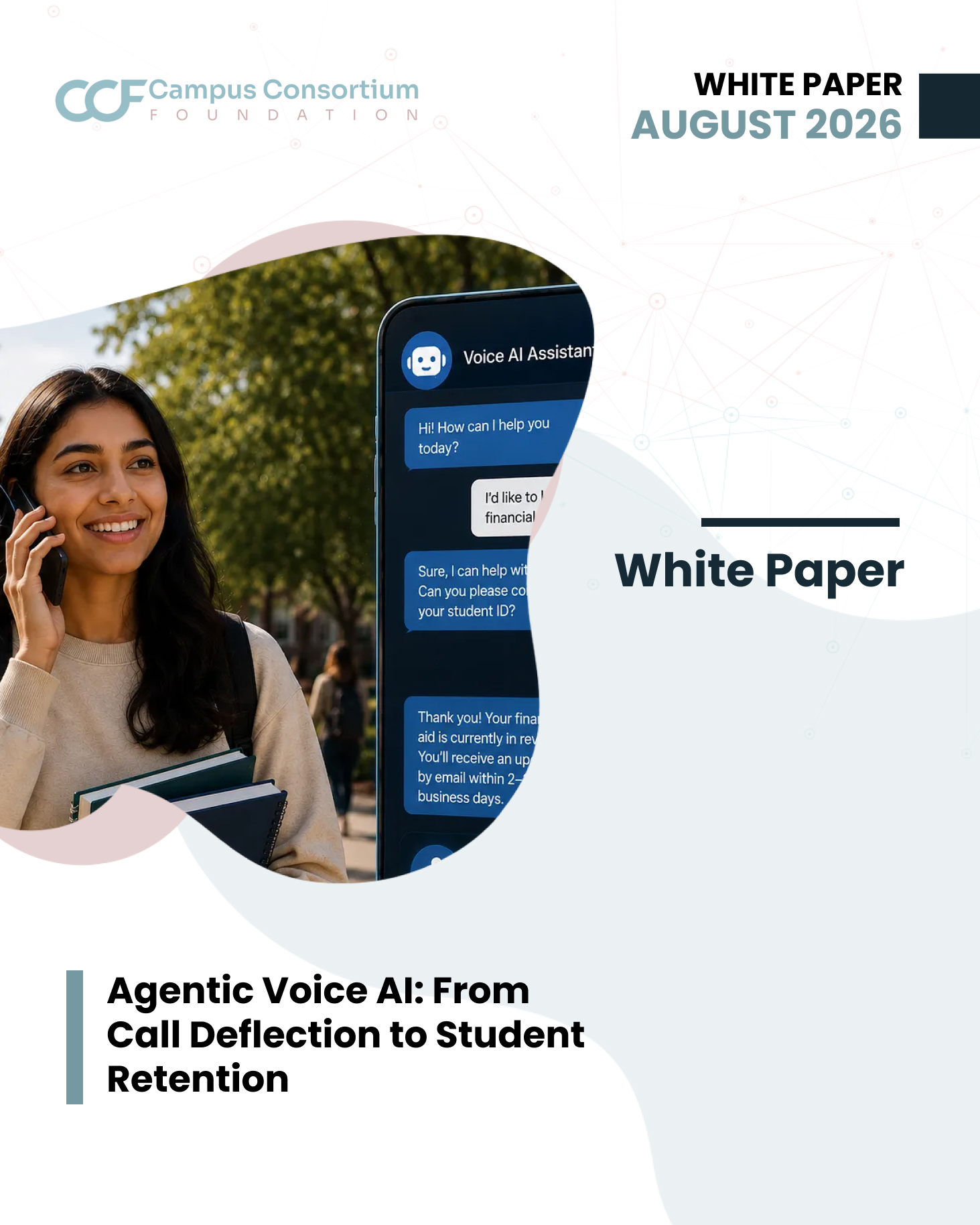
The phone remains one of higher education’s most important, and most strained, student-support channels. Long holds, peak-season surges, missed calls, and limited after-hours support can turn routine questions into enrollment and retention risks.
This research examines how conversational voice AI can move institutions beyond simple call deflection toward faster support, stronger student access, and measurable enrollment and retention outcomes. It explores what voice AI does well, where it fails, how to measure it, and what a responsible deployment requires.
Key Questions Answered
- Why is the traditional higher education phone channel failing students?
- What can conversational voice AI realistically automate today?
- How can faster response times affect enrollment and retention?
- How should institutions measure resolution, containment, and student experience?
- What does voice AI cost compared with traditional live-agent support?
- Where can voice AI fail, and how should institutions manage those risks?
- What should institutions evaluate before deploying voice AI?
Features
- Research Focus: Voice AI, Student Support, Enrollment, Retention, Contact Centers
- Framework: Deflection-to-Retention Value Spectrum
- Key Metrics: Intent Accuracy, Containment, Resolution, Handle Time, Response Speed
- Business Outcomes: Lower Support Costs, Faster Response, Improved Access, Enrollment and Retention
- Research Sources: Higher Education Research, Voice AI Benchmarks, Retention Research, Institutional Case Studies
- Research Perspective: Independent, Evidence-Based, Vendor-Neutral
- Published by: Campus Consortium Foundation
- Research Availability: August 2026
Table of Contents
- Executive Summary
- The Higher Education Phone Problem
- What Voice AI Does and Does Not Do
- From Call Deflection to Student Retention
- The Evidence: Responsiveness, Enrollment, and Retention
- Accuracy, Containment, and the Metrics That Matter
- The Cost of Voice AI
- Equity and Access
- Barriers to Getting Voice AI Right
- The Human Side of the Voice Channel
- Institutional Examples and Lessons
- Voice AI Readiness Self-Assessment
- What Institutions Should Do Next
- Where Voice AI May Fail
- Looking Ahead: 2027–2028