Campus Consortium Foundation
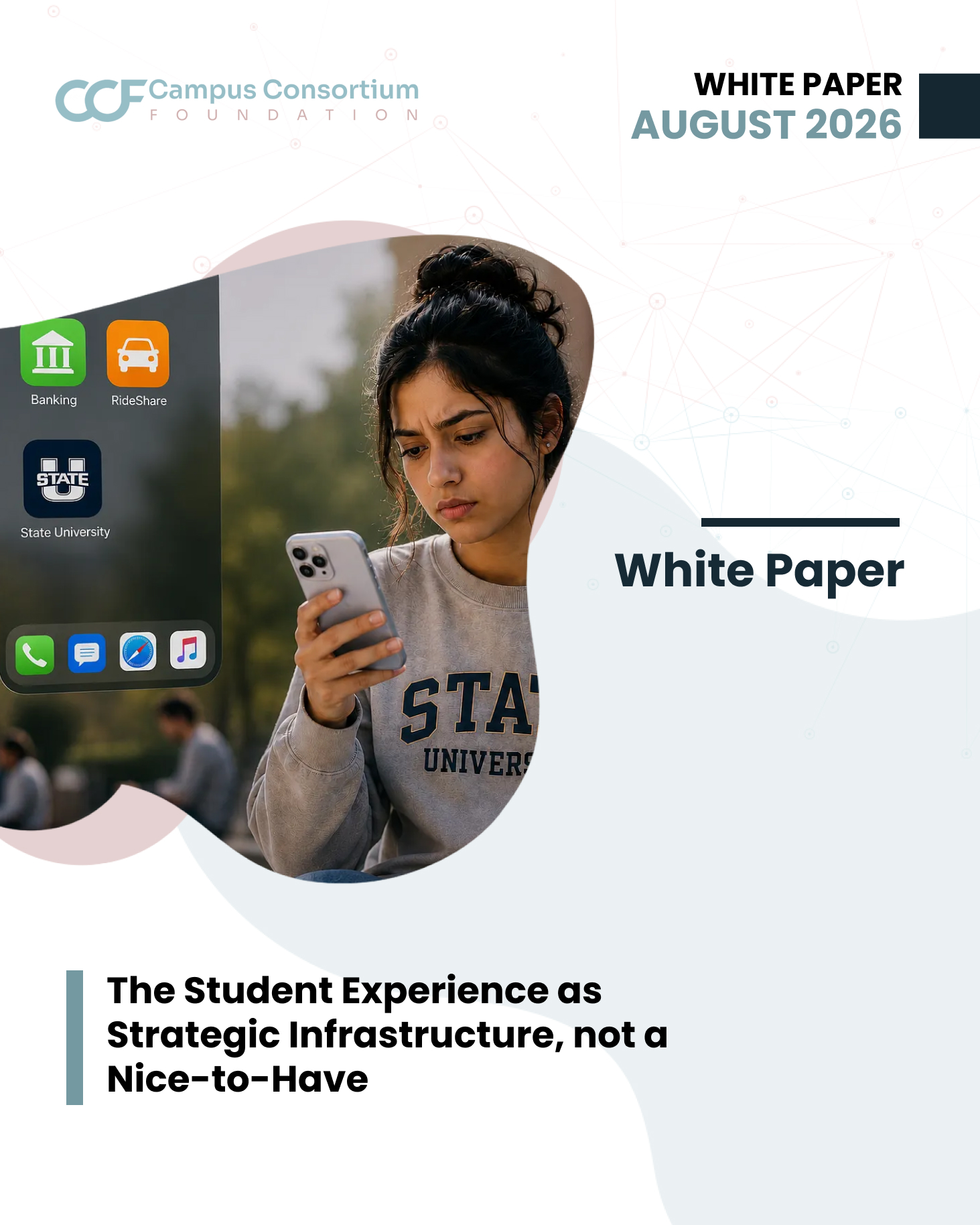
The Student Experience as Strategic Infrastructure, not a Nice-to-Have
Why Read This Research
Student digital experience is often treated as a convenience: a better portal, a smarter app, or another way to make campus services easier to use. This research argues that framing is now outdated. As enrollment markets tighten and students increasingly expect consumer-grade digital experiences, the digital layer has become one of the primary ways students encounter, navigate, and judge an institution.
This brief examines why student experience should be governed, funded, and measured as institutional infrastructure rather than a collection of disconnected technology projects. It introduces the Student Experience Infrastructure Model (SEIM), showing how institutions move from fragmented tools to unified, integrated, and ultimately predictive student experience infrastructure and what that progression means for enrollment, retention, operational capacity, and institutional competitiveness.
Key Questions Answered
- Why should student digital experience be treated as institutional infrastructure?
- How are changing demographics and student expectations raising the cost of digital friction?
- What does consumer-grade digital experience mean for higher education?
- Where does digital experience connect to enrollment, satisfaction, belonging, and retention?
- What separates a unified front door from a truly integrated experience platform?
- Where does an institution sit on the Student Experience Infrastructure Model?
- How should leaders evaluate the business case and break-even for experience investments?
Features
- Research Focus: Student Experience, Digital Transformation, Retention, Enrollment, Institutional Competitiveness
- Framework: Student Experience Infrastructure Model (SEIM)
- Key Areas: Student Expectations, Experience Management, Digital Maturity, Retention Economics, Experience Platforms
- Core Outcome: A strategic framework for governing, funding, and measuring student experience as institutional infrastructure
- Research Perspective: Independent, Evidence-Based, Vendor-Neutral
- Published by: Campus Consortium Foundation
- Research Availability: August 2026
Table of Contents
- Executive Summary
- The Industry Challenge: A Contracting Market and a Consumer-Grade Expectation Gap
- Research Question and Working Thesis
- From Service to Infrastructure: What the Reframe Means
- Digital Transformation: From Projects to Operating Model
- Student Expectations: The Consumer Benchmark
- Experience Management: Borrowing a Discipline
- Institutional Competitiveness: The Economics of Experience
- The Evidence on Outcomes: Enrollment, Satisfaction, Retention
- The Student Experience Infrastructure Model
- Function by Function: What the Model Looks Like in Operation
- Reading the Investment: Assessing Experience Platforms as Strategic Investments
- The Future Outlook
- From Research to Practice