White Paper
08/19/2026
Campus Consortium Foundation
Meeting Students Where They Are: The Omnichannel Support Imperative
Why Read This Research
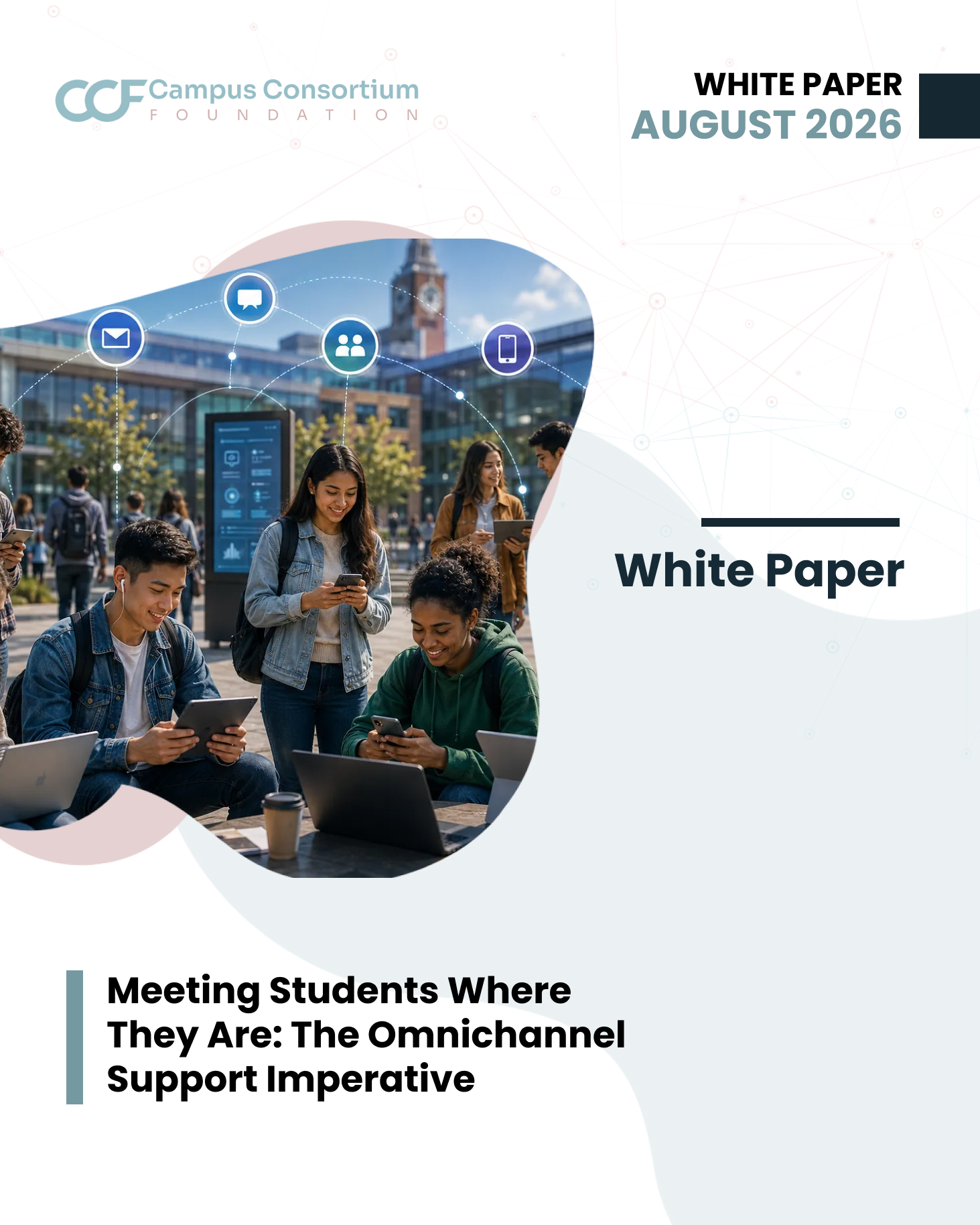
Students do not think in terms of departments, systems, or support channels. They expect the institution to remember who they are and what they need, whether they reach out by text, chat, phone, email, portal, or in person.
This whitepaper examines why simply adding more support channels is not enough. It makes the case for a connected, omnichannel support model where context follows the student, information stays consistent, and self-service, AI, and human support work as one experience. The report also examines the operational and retention costs of fragmented support and provides a practical framework for assessing omnichannel readiness.
Key Questions Answered
- Why are students increasingly switching between multiple support channels?
- What is the real cost of making students repeat themselves?
- What is the difference between multichannel and omnichannel support?
- Which support channels do today's students actually prefer?
- How can AI become a continuity layer rather than simply another support channel?
- What does fragmented support cost in staff time, enrollment, and retention?
- How can institutions assess their readiness for a connected student-support experience?
Features
- Research Focus: Student Support, Omnichannel Strategy, AI, Student Experience, Retention
- Framework: The Omnichannel Framework: Presence, Continuity, Consistency
- Practical Tool: Omnichannel Readiness Self-Assessment
- Investment Model: Fragmentation-Cost / Continuity-Value Model
- Audience: CIOs, CTOs, Student Affairs, Enrollment, and Student-Experience Leaders
- Perspective: Independent, Evidence-Based, Vendor-Neutral
- Published: August 2026
Table of Contents
- Executive Summary
- The Fragmented Student Journey
- What Channels Students Actually Use and Expect
- How This Research Was Done
- The Omnichannel Framework: Presence, Continuity, Consistency
- The Cost of Fragmentation
- The Engagement-Retention Link
- The Self-Service Generation
- Barriers to a Connected Experience
- The Human Side of Omnichannel
- Two Institutions and a Pattern to Avoid
- A Practical Self-Assessment for Student-Experience Leaders
- What Institutions Should Do Next
- Where Omnichannel May Fail: A Contrarian Assessment
- Looking Ahead: 2027-2028