White Paper
08/18/2026
Campus Consortium Foundation
Integration Without the Headache: Connecting Campus Systems Through One Identity Layer
Why Read This Research
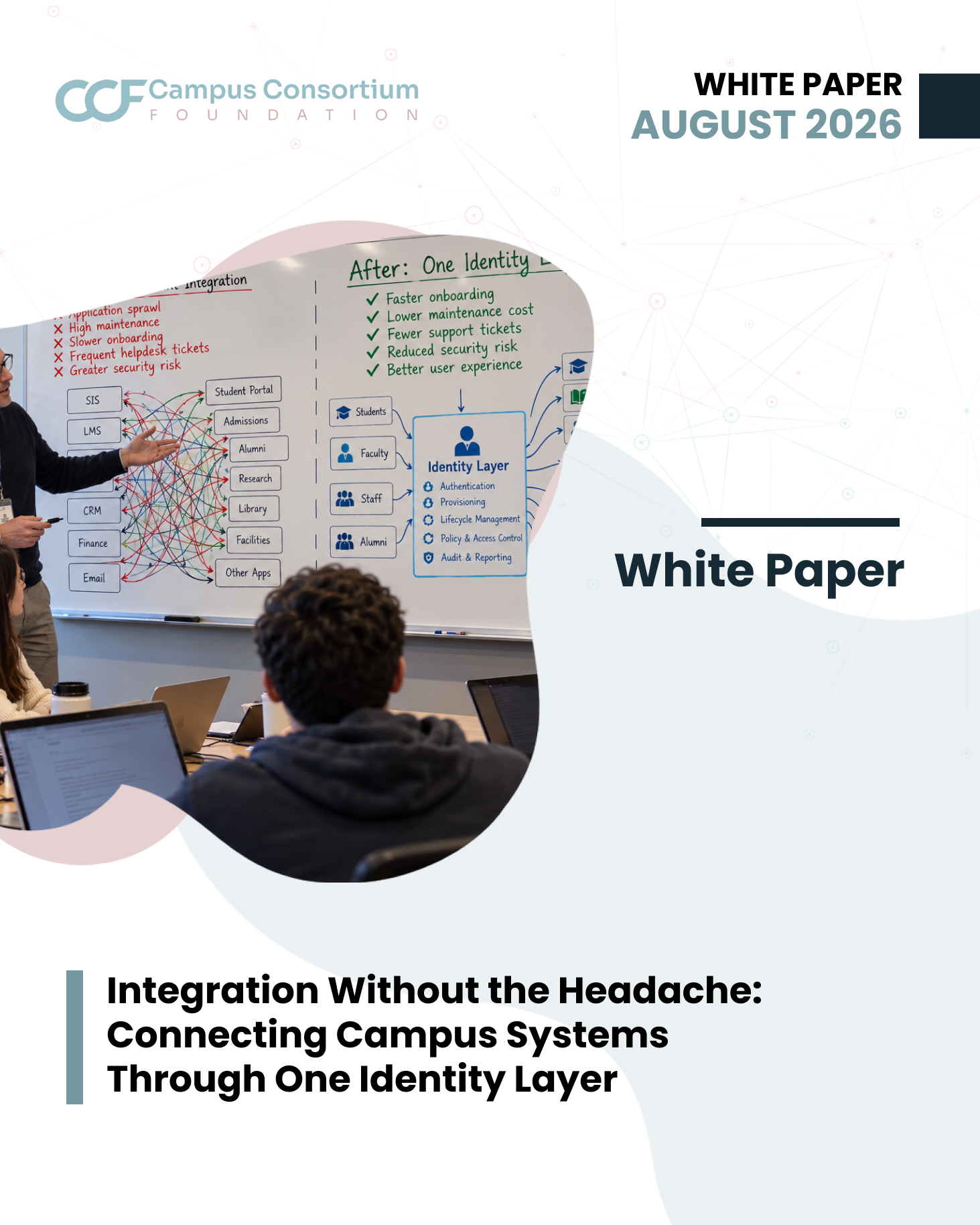
Campus technology has become increasingly fragmented, with dozens of applications, systems, and integrations creating rising maintenance costs, slower deployment, and greater security risk.
This research examines why point-to-point integration breaks down at scale and how identity can serve as the central integration layer across campus systems. It translates the architecture into the outcomes CIOs care about: faster application onboarding, fewer support tickets, lower maintenance burden, and reduced security exposure.
The research also includes a practical business case and institutional case study showing what changes when campuses move from point-to-point integration to a centralized identity architecture.
Key Questions Answered
- How does application sprawl increase integration cost and risk?
- Why does point-to-point integration become unsustainable at scale?
- Why is identity the natural integration layer for campus systems?
- What are the operational and security benefits of centralized identity integration?
- How should institutions calculate the cost of their current integration environment?
- What does a practical three-tier identity architecture look like?
- What should CIOs consider when evaluating integration approaches and platforms?
Features
- Research Focus: Campus Integration, Identity Architecture, Application Sprawl
- Framework: Three-Tier Identity Architecture Model
- Business Outcomes: Faster Onboarding, Lower Maintenance Cost, Fewer Helpdesk Tickets, Reduced Security Risk
- Case Study: From 137 integration touchpoints to 42
- Research Approach: Analysis of higher education research, institutional data, and CCF practitioner findings
- Published by: Campus Consortium Foundation
- Research Availability: June 2026
Table of Contents
- Executive Summary
- The Modern Campus Technology Problem
- Application Sprawl and Its Operational Consequences
- Why Point-to-Point Integration Breaks Down
- Identity as the Integration Layer
- The Business Case: Measurable Operational Impact
- Security Impact: Real-Time vs. Batch Deprovisioning
- The Three-Tier Identity Architecture Model
- Institutional Case Study: From 137 Integrations to 42
- Integration Approaches for Higher Education
- Future Outlook