Campus Consortium Foundation
The Persistence Signal: How Identity and Access Shape the Path to Student Success
Why Read This Research
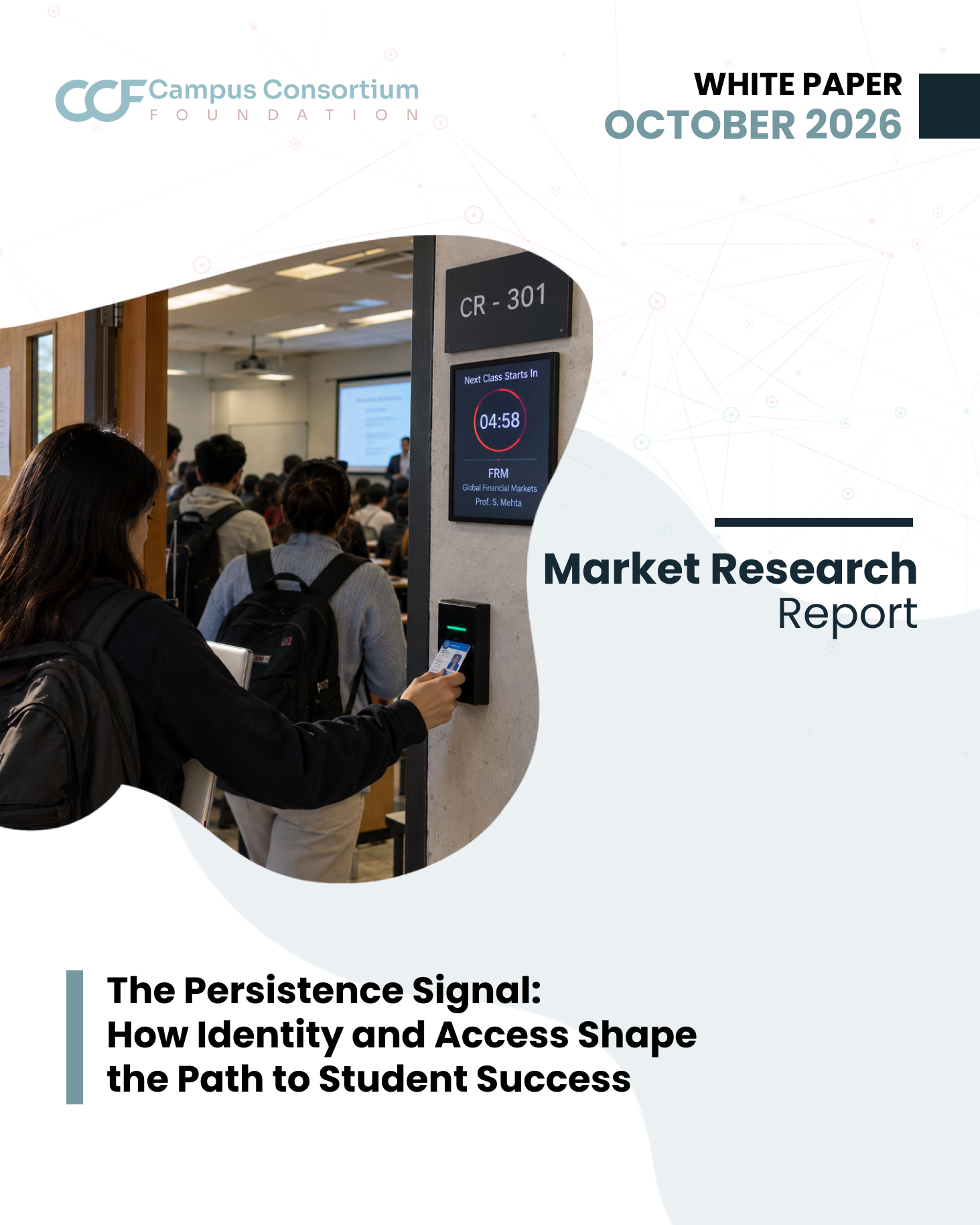
Student persistence is shaped not only by academic and financial pressures, but also by the identity and access of events that determine whether a student can enter, remain connected, and continue toward a credential. This research examines the emerging persistence-signal market across identity proofing, fraud screening, authentication, access recovery, engagement signals, and student-support interventions while assessing how access friction can be mistaken for attrition.
The report goes beyond identity security to examine the economic value of retention, student and institutional risk, market segmentation, solution archetypes, evidence from interventions, buyer priorities, technology maturity, vendor-neutral competition, emerging technologies, governance, equity, and the market outlook through 2030. It also identifies the largest evidence gaps and the white spaces where better identity continuity, access, and persistence measurement could create new value.
Key Questions Answered
- How do identity proofing, authentication, access recovery, and engagement signals influence the student's persistence journey?
- How large is the persistence-signal market, and what is the economic value of improving retention while reducing identity-related fraud?
- Which student groups, institution types, and points in the student journey face the greatest identity and access risks?
- What evidence shows that identity, access, advising, and student-support interventions can improve persistence or reduce stop-out?
- Where does access friction become a barrier to enrollment, re-enrollment, or continued participation and what evidence is still missing?
- Which solution archetypes offer the strongest balance of security, persistence evidence, equity, usability, and integration?
- How are federal fraud controls, NIST standards, procurement requirements, and changing student-access expectations reshaping institutional priorities?
- What market opportunities, technology shifts, risks, and adoption scenarios should higher-education leaders prepare for through 2030?
Features
- Market Intelligence: Market size, adjacent spending, students at stake, economic opportunity, segmentation, drivers, barriers, and 2026–2030 outlook
- Persistence Analysis: Second-fall persistence, retention, stop-out, transfer, student groups, adult learners, and persistence gaps
- Identity & Access: Identity proofing, fraud screening, authentication, passkeys, account recovery, lifecycle provisioning, and access friction
- Evidence & Impact: Randomized interventions, advising models, conversational outreach, outcome evidence, research limitations, and measurement gaps
- Solution Landscape: Seven solution archetypes, competitive categories, buyer priorities, CCF scoring criteria, integration, and vendor-neutral evaluation
- Buyer Guidance: CIO, security, financial aid, enrollment, provost, student success, institutional research, and CFO priorities
- Risk & Regulation: Federal fraud controls, NIST SP 800-63-4, equity, usability, adverse-impact testing, student-data risk, and implementation barriers
- Future Outlook: Emerging technologies, white spaces, access continuity, reusable credentials, AI-enabled identity risks, adoption scenarios, and strategic implications through 2030