White Paper
08/17/2026
Campus Consortium Foundation
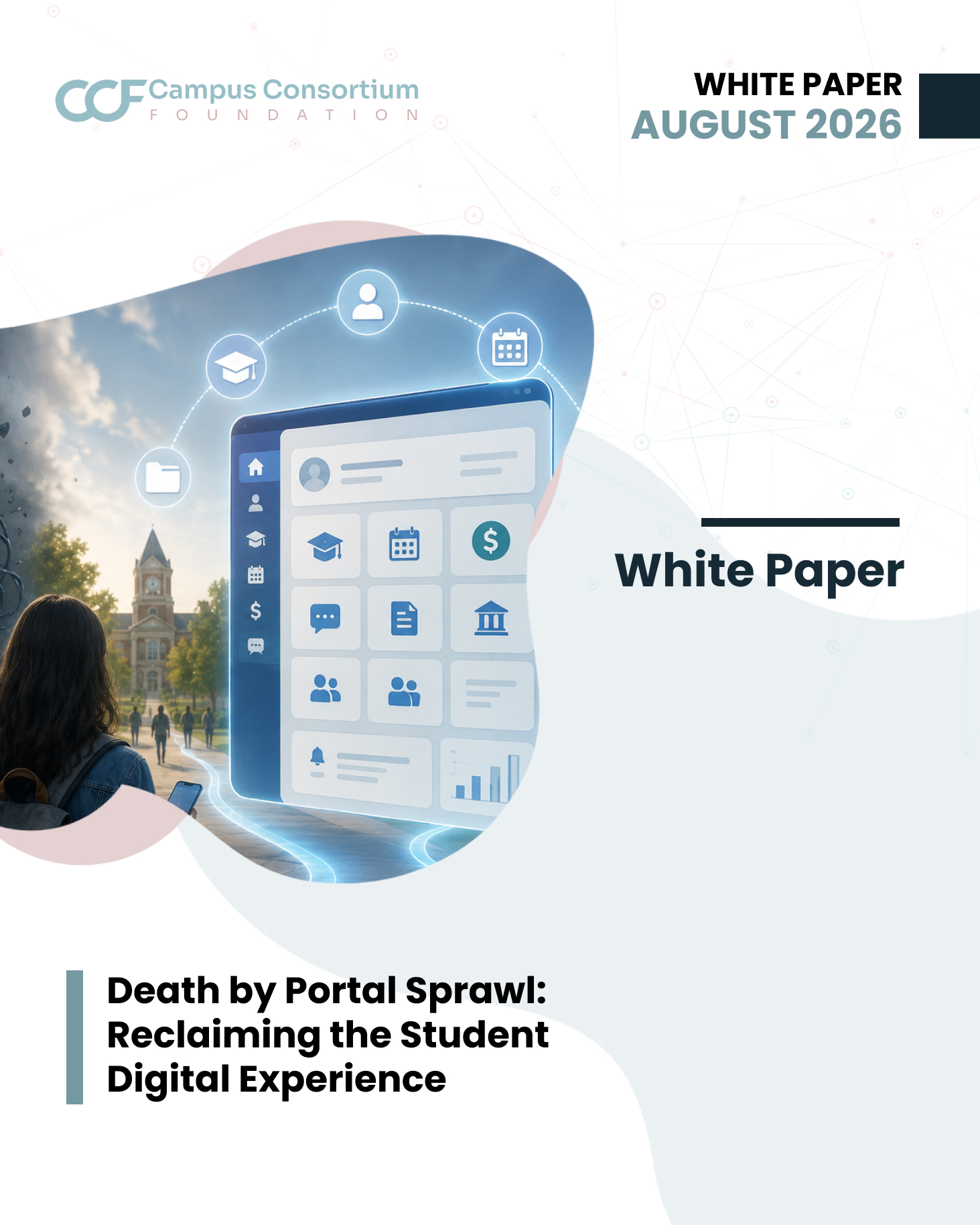
Death by Portal Sprawl: Reclaiming the Student Digital Experience
Why Read This Research
Students navigate a growing number of disconnected campus systems, creating friction that can lead to missed deadlines, weaker engagement, poor service experiences, and ultimately student loss.
This research examines the cost of portal sprawl and what institutions can do to move from fragmented systems to a more unified, connected student experience.
Key Questions Answered
- What does portal sprawl actually look like for students?
- How do disconnected systems affect engagement, service delivery, and retention?
- What is the difference between single sign-on, aggregation, and a unified experience?
- Where does your institution fall on the Digital Experience Maturity Model?
- What are the financial, operational, and equity costs of fragmentation?
- What should institutions do to move toward a more unified digital experience?
Features
- Framework: Student Access, Aggregation, and Coherence
- Maturity Model: Five stages from Portal Sprawl to Personalized & Proactive
- Institutional Impact: Engagement, service delivery, retention, staff capacity, and equity
- Self-Assessment: Practical questions to benchmark your institution’s digital experience
- Action Plan: Six recommendations for reducing fragmentation and connecting existing systems
- Readiness Tools: Digital-Experience Readiness Checklist and Sprawl-Cost / Unification-Value Model
- Research: Independent, vendor-neutral analysis using third-party research, institutional evidence, and CCF synthesis.
Table of Contents
- Executive Summary
- The Digital Front Door That Isn't
- The Expectation Gap
- How This Research Was Done
- The Fragmentation Framework
- The Cost of Sprawl
- Why Sprawl Happens
- Office by Office: Where the Seams Cut Deepest
- Office by Office: Where the Seams Cut Deepest
- Two Institutions and a Pattern to Avoid
- A Practical Self-Assessment for Leaders
- What Institutions Should Do Next
- Where Unification May Fail
- Looking Ahead: 2027–2028
- From Research to Practice: Closing the Sprawl Gap